Dental Services

Veterinary dental health focuses on preventing, diagnosing, and treating oral diseases in pets to preserve comfort, function, and overall health. Common issues include periodontal disease (plaque and tartar buildup leading to gum infection and tooth loss), fractured teeth, tooth root abscesses, malocclusions, and oral tumors. Regular preventive care—daily tooth brushing, dental diets or chews, and professional cleanings with scaling and polishing under anesthesia—reduces plaque and bacteria that can contribute to systemic problems (heart, kidney, liver). Dental exams should be part of routine wellness visits; diagnostics may include full-mouth dental charts and dental radiographs to evaluate roots and bone. Treatments range from non-surgical cleaning and tooth extractions to restorative procedures and surgery for advanced cases with dental specialist referral. Early detection and at-home care are key to maintaining your pet’s comfort and long-term health.
Extraction: It is recommended when one or more of the following criteria are present:
More than 60% periodontal bone loss.
Exposed bifurcation (the area where tooth roots divide).
Severe tooth mobility.
Exposed pulp (the living portion of the tooth).
Slab fracture that extends beyond the gum line.
Resorptive lesion on the enamel.
Pulpitis (inflammation of the tooth pulp).
Retained deciduous (baby) teeth.
When these conditions exist, extraction is often the best option to relieve pain, prevent ongoing infection, and protect surrounding teeth and oral tissues.
Pain control and anesthesia safety: Pre-anesthetic evaluation, individualized anesthesia and pain management protocols, and intraoperative monitoring to ensure your pet’s safety and comfort.
Postoperative care and home instructions: Clear guidance on pain medications, diet modifications, oral hygiene, and follow-up appointments to support recovery and long-term dental health.
What we offer
Brief oral exam: A brief oral exam will be performed prior to the dental procedure to assess the visible extent of your pet’s dental condition. This limited awake exam allows us to evaluate teeth, gums, oral masses, and obvious pain or infection. It helps us identify urgent issues and plan the initial approach for the procedure.
Important: many dental disease (especially those involving roots and bone) are not visible during an awake exam. Decisions about extractions or advanced treatment are often determined only after the anesthetized exam and dental X-rays.
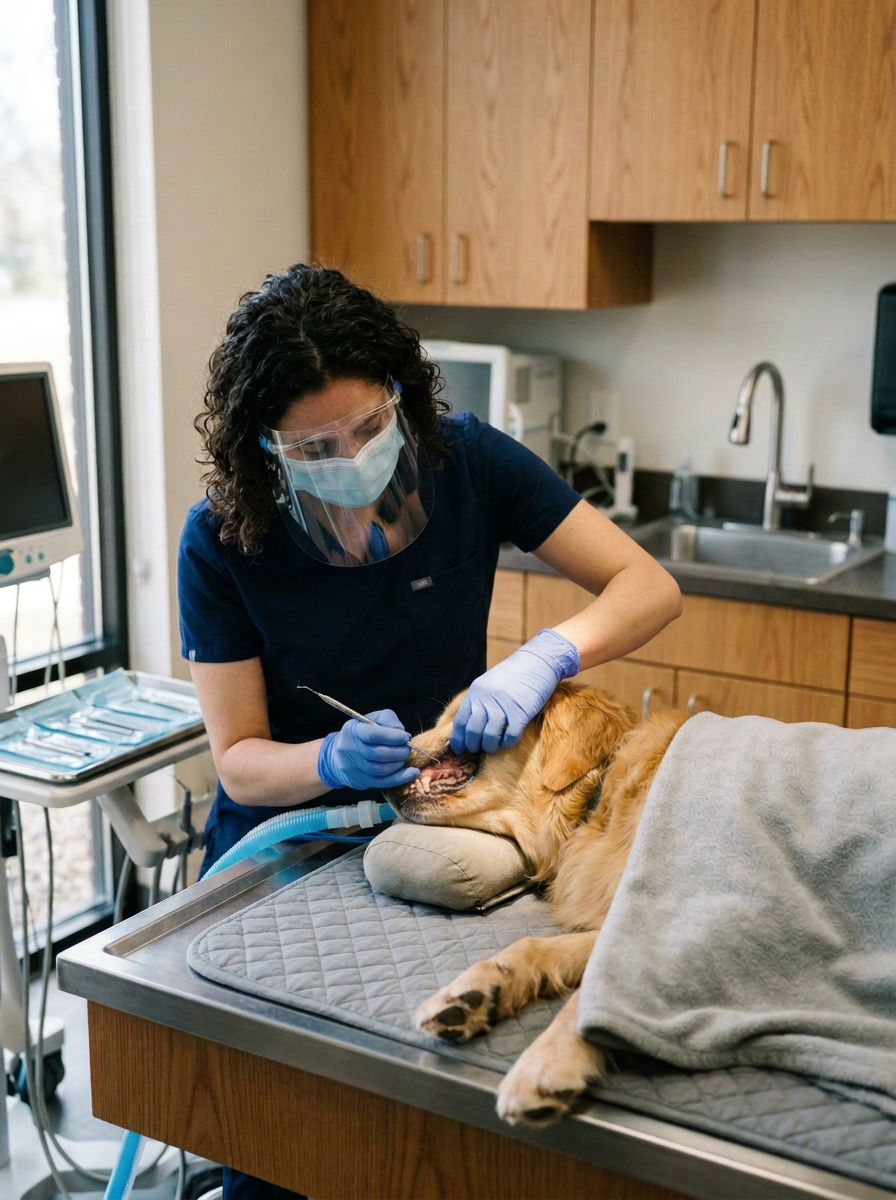
Comprehensive oral exam: A thorough assessment of the mouth, teeth, gums, and supporting structures under anesthesia to identify disease that cannot be seen during an awake exam.
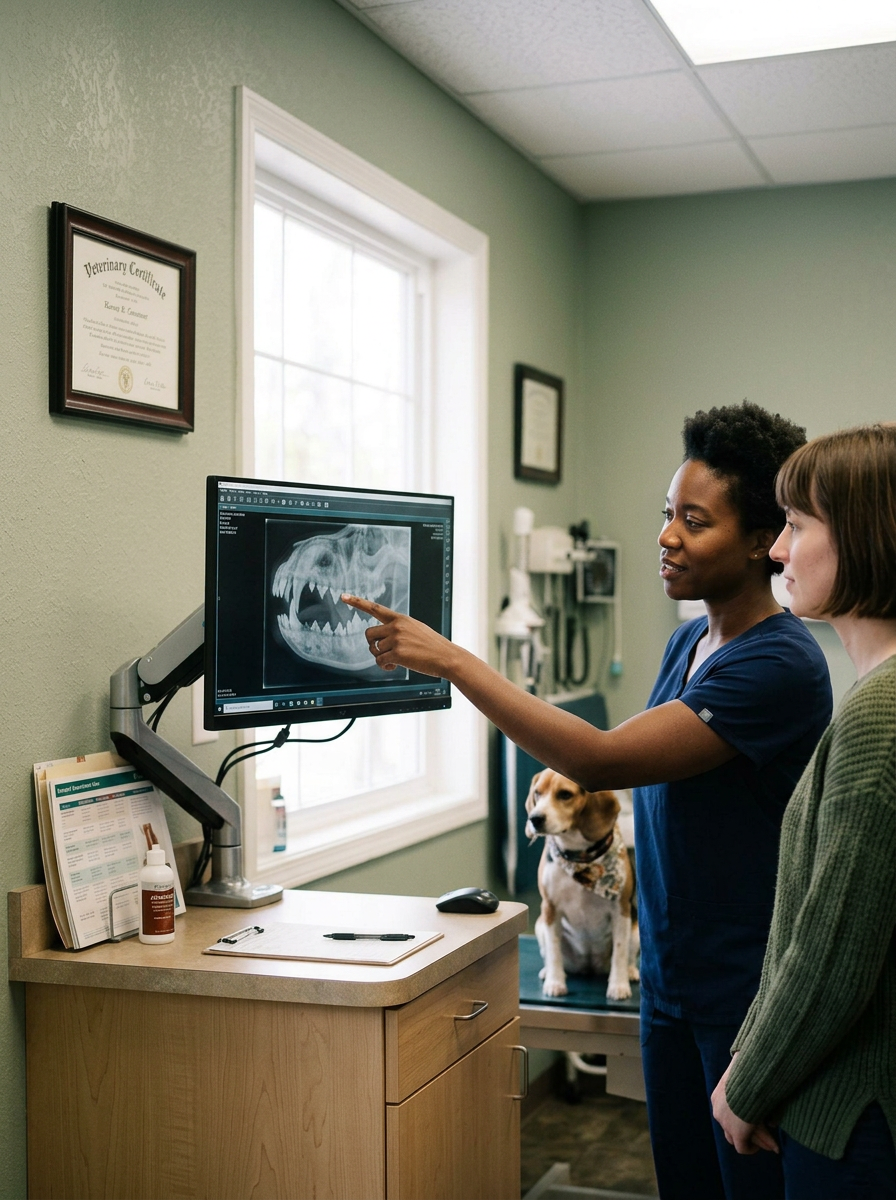
Dental radiographs (X‑rays): Intraoral digital radiographs to evaluate tooth roots, bone, and periodontal structures. Radiographs reveal hidden pathology such as root resorption, fractures, abscesses, and bone loss that guide treatment decisions.
Routine dental cleaning (prophylaxis): Scaling to remove plaque and tartar above and below the gumline, polishing to smooth the tooth surface, and a topical fluoride or sealant when appropriate to help reduce future plaque accumulation.